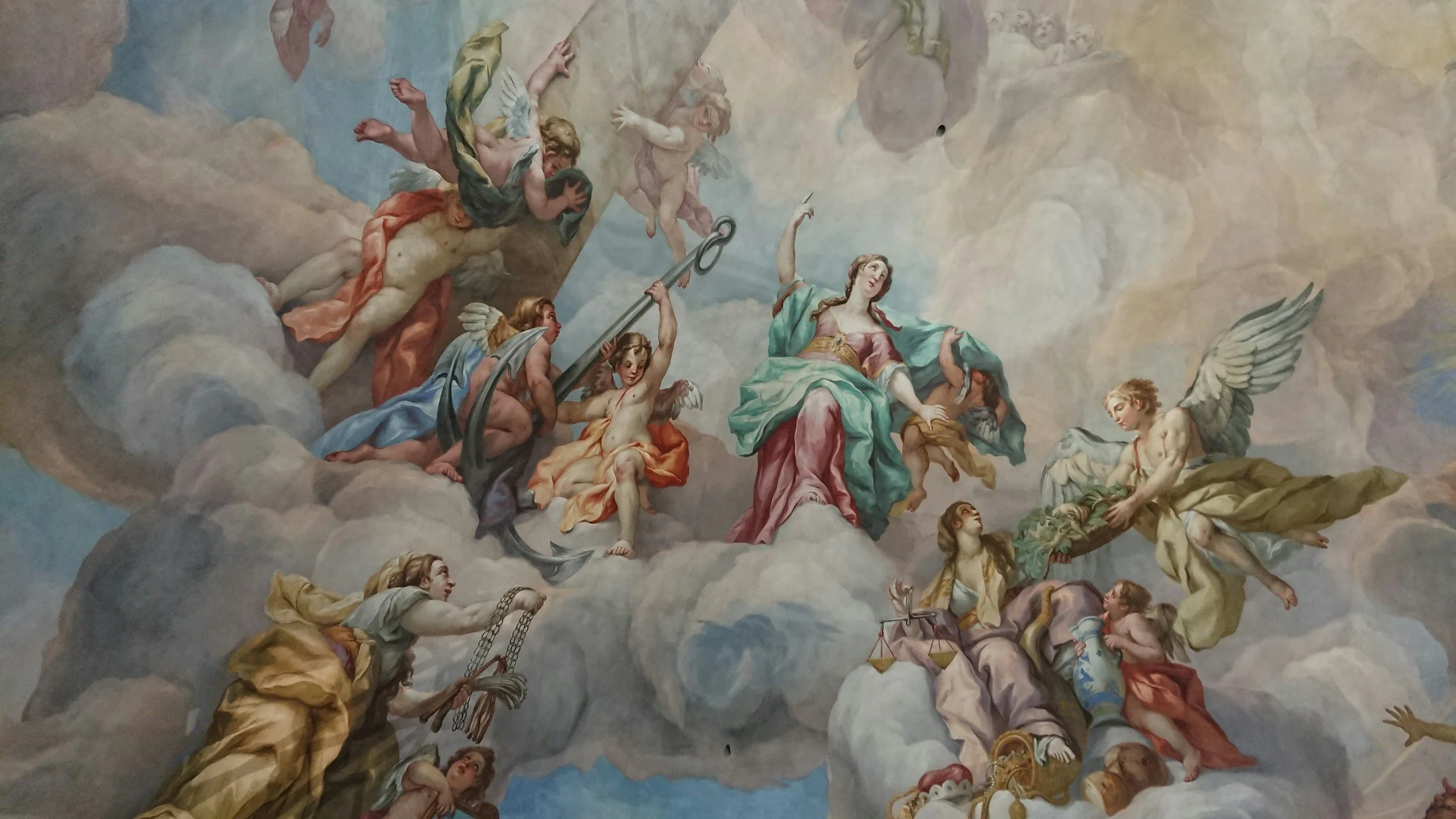
When we hear the word "faith," it often evokes images of serene church services, comforting hymns, and peaceful prayers. But for some, faith carries a much more complicated and painful implication—calling to mind memories of sharp words, pain, and betrayal. Religious trauma is an issue that’s rarely talked about, but it affects many—ripping through lives and leaving lasting scars. But even among these wounds, there's hope. There's healing and redemption. People can find their way back to the faith they once felt estranged from by reinventing what it means to them. Let’s take a closer look at religious trauma, the intersections of politics and religion, and my personal journey from doubt to spiritual renewal. The road back is never easy, but it's worth every step.
Understanding Religious Trauma: The Hidden Wounds of Faith
Religious trauma arises when a place that is supposed to be safe turns hostile, when overwhelming and disruptive events become tied to religious beliefs, practices, or structures. When someone’s faith, which was once a source of comfort, becomes a battleground of hurt, these experiences can manifest as emotional, physical, mental, or social harm. Whether it’s through abusive relationships, rejection, isolation, or even ridicule, the scars can run deep. Consider the alienation that many LGBTQ+ individuals face when their religious communities cast them out, or the soul-crushing pressure that religious institutions sometimes place on individuals to conform to impossible standards. For these people, God is no less of a watchful figure, but he watches in judgment instead of with love.
Many people associate a stereotypical Christian with a Sunday-only churchgoer who uses their religion as a tool for moral superiority. They might see someone who’s quick to impose their views on others—perhaps even condemning someone to hell for their choices. This creates a dangerous cycle of hypocrisy and leaves many people, including myself, feeling disconnected and abandoned by the very community they once sought comfort in. I can still recall the frustration of dealing with people who, under the banner of Christianity, showed nothing but anger and judgment. A recent interaction with a woman at work, yelling at me about a failed order, serves as a stark reminder. She was livid—her voice cracking with rage—and I had to keep the phone a foot away from my ears. As I calmly explained the available solutions, her anger shifted toward an odd question: "Are you going to have this order delivered before church?" This dissonance between professed beliefs and lived behavior was just why I walked away from the church during my most difficult times—times when I was seeking something more than hypocrisy.
Politics and Religion: A Tense Dance Between Church and State
Religion doesn’t exist in a vacuum. Particularly in America, Christianity often finds itself at the crossroads of politics, and the line between religion and government constantly flickers in and out of sight. Politicians, knowing the immense influence of religion in many people’s lives, often use faith as a means to gain leverage, pass laws, and fuel divisiveness. Nowhere is this more apparent than in the debate surrounding the Pledge of Allegiance. In 1954, after the words "under God" were added, the Pledge became a flashpoint for many—especially those whose religious convictions made them uncomfortable with the phrase. In the years that followed, Supreme Court cases like Minersville School District v. Gobitis and Frazier v. Winn revealed the complexities of balancing personal religious beliefs with government practices. The core of the argument was that the government's imposition of religious language—like “under God”—in public schools potentially violates the constitutional separation of church and state. This argument became more widespread when in 2019, a sixth-grader was arrested for refusing to recite the Pledge in school, reigniting debates about freedom of speech, parental rights, and religious expression. While many lawmakers in Washington D.C. recited the Pledge in defiance, the issue remained clear: The relationship between politics and religion is fraught with tension, forcing people to navigate their faith in a world of conflicting ideologies, and what some people see as tradition, others can experience as coercion. Faith should never be forced. And yet, so often, religious language becomes political currency—used not to uplift, but to divide.
My Path to Renewed Faith: From Doubt to Devotion
I didn’t plan to return to faith. In fact, I’d carefully closed that door. But life has a way of calling us back in the most unexpected moments. For me, it was a car crash. Sounds dramatic, but there was one moment among the chaos that I felt a divine presence hold me back in my seat, keeping me safe in ways I couldn’t explain. As I walked away from the crash, largely unharmed where I should have been greatly injured, I realized: This wasn’t just luck. It felt like the hand of God.
In the weeks that followed, I couldn’t shake the feeling that something was shifting inside me. I had not picked up a Bible in over a decade, but suddenly I found myself drawn to it, opening the pages of Matthew with a sense of wonder. The words resonated with me in a way they never had before. Now that I had seen both the darkness of religion and the beauty of grace, I saw my life unfolding differently, realizing I couldn’t expect blessings if I wasn’t willing to reconnect with God in my own way. Soon, my family and I began attending church every Sunday. By summer, I was taking my faith seriously—praying, learning, and diving deeper into the teachings. Sunday by Sunday, prayer by prayer, something shifted. My child was dedicated. I was baptized, and I had a vision of Jesus rising from the waters. With every step, I felt more whole. Not perfect, but grounded. Reconnected. At peace. The experience was nothing short of magical, and I knew that I was exactly where I needed to be.
Since I rediscovered and reframed the impact of faith in my life, I’ve seen shifts in how I think, how I approach challenges, and how I interact with others. Faith has brought me peace. I now turn to God in moments of doubt and fear, and prayer has become an essential part of my life. I pray not just for myself, but for those I love—for their happiness, their well-being, and their growth. I can’t express how much happier I am today, or how much more grounded I feel. I’ve learned to face life’s difficulties with hope. My faith has opened my heart to new possibilities and has made me more open to others. My practice is not just a belief; it’s a way of living, breathing, and growing.
When I interact with individuals from different religious backgrounds or those who are non-religious, I don’t preach. Everyone has a different level of comfort when it comes to spiritual topics, and I do my best to meet them where they are without pushing an agenda. Some people light up at the opportunity to talk about faith, while others visibly tense at the mention of “God” or “Jesus”—and that’s something I deeply respect. I know that not every conversation needs to include religion, and often, the most powerful message I can share is simply showing up with love, patience, and a listening ear. I never feel it’s my place to judge or push; instead, I focus on planting seeds of kindness. I approach every interaction with peace, respect, and compassion, believing that how I treat others reflects my faith more than any words ever could. My job is not to force, but to reflect the grace I’ve received.
Conclusion: A Journey of Healing and Hope
The journey from religious trauma to spiritual renewal is a winding path. It can be full of pain, doubt, and confusion. But it can also be a journey of hope, healing, and transformation. Whether you’re questioning your faith or rediscovering it, know that there’s always light at the end of the tunnel. There’s a way to find peace, love, and connection with something greater than yourself. There is room for a different kind of faith—one rooted in compassion, not control; in curiosity, not certainty. So, if you’re struggling, know this: You’re not alone. The wounds of religious trauma are real, but they don’t have to define you. The road back might not lead you to the same church, or even the same beliefs—but it can lead you to peace. To love. To God, in whatever way you choose to understand Him.
You are not alone. And the journey—however hard—is worth every step.
